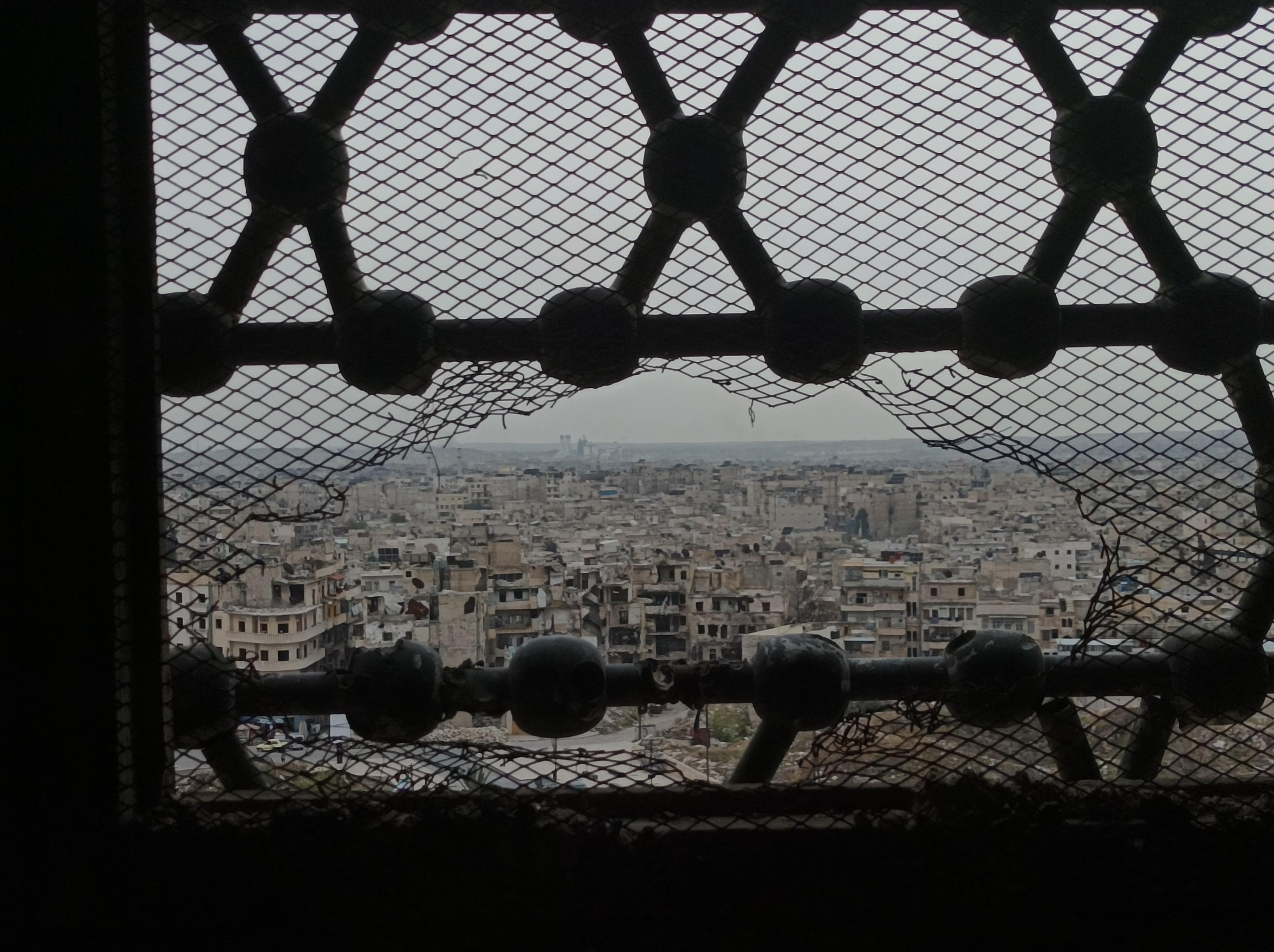
Analysis: What does the captivation of several wanted members of the former Syrian regime mean for transitional justice?
In recent weeks, Syrian news has reported the detention of several well-known figures associated with the former regime, namely Amjad Youssef, one of the main individuals responsible for the Tadamon massacre in 2013, and the trial of Atef Najib, former head of the Political Security Branch in the Daraa province.
But why are all these detentions and trials happening only now, almost two years after the fall of the former regime? What is behind them? And most importantly, what is their significance in the process of transitional justice, and how can the latter be achieved?
Undoubtedly, these arrests and trials are an important part of transitional justice. Yet, they represent only a small fraction of it.
The recent cases highlight the need to ease tensions linked to the difficult reality faced by victims of the former regime: that the majority of perpetrators are still either moving freely within Syria or living in exile, as is the former president Bashar al-Assad himself.
The arrests are taking place at a moment when the initial sense of euphoria after liberation among the population has faded, and the harsh reality of a country where 90% still live below the poverty line has re-emerged. Rising prices for electricity and everyday goods, as well as the Syrian pound’s return to pre-liberation levels despite the introduction of a new currency and the lifting of sanctions, are placing a heavy burden on a population that has already endured 14 years of civil war. Even though the Minister of Finance recently announced a 50% increase in public sector salaries, wages remain far below what is needed to live.
Now, are the arrests and trials happening solely as a way to distract from the economic situation? Certainly not. As already stated, they carry strong symbolic weight. Amjad Youssef, who became widely known through videos linked to the Tadamon massacre in 2013, and Atef Najib, cousin of the former president and responsible for the abduction and torture of 15 boys who wrote anti-Assad slogans in a public space at the beginning of the 2011 revolution, are highly symbolic figures of the former regime. Their capture and trial are crucial for many people seeking a sense of justice for the atrocities committed.
Yet transitional justice requires more than the detention of a few prominent figures from the former government.
The Syrian case is especially complex due to the “fragmentation of sovereignty” during Assad’s rule and the sharp societal divisions resulting from a conflict that lasted fourteen years, as the Syrian Network for Human Rights notes. Therefore, potential solutions must be multidimensional, and a collective narrative is needed to prevent sectarian stigmatization of particular groups. While the full process and its components are too complex to be covered in detail here, some basic principles are urgently needed to stabilize the country.
First, as already mentioned, economic growth and security are fundamental to transitional stability. Without job opportunities and a livable future, especially young people risk falling into extremist networks or leaving the country, creating the same vicious cycle seen during the civil war. A stable political environment with unified institutions is equally essential. The formation of a representative body remains unclear: only recently, Kobane, Hasakah, Qamishli, and Derik (al-Malikiyah) held votes for the People’s Assembly, leaving Suweida as the last governorate to designate its representatives. Even in these elections, parts of the Kurdish population have criticized the process as unfair and undemocratic. On the other hand, basic infrastructure such as healthcare is also crucial, as recent EU investments have shown.
Lastly, criminal law needs to be revised and adapted to prevent the risk of impunity or selective justice. This can only be achieved through a legitimate legislative body of elected representatives. But to what extent can such laws prosecute all those responsible? As already mentioned, the “fragmentation of sovereignty” creates a highly complicated environment for transitional justice. In addition, time is limited: failure to act in time may push parts of the population to take justice into their own hands.
Another question also arises: can peace and prosperity be achieved if not everyone is judged equally under the law, or will this instead deepen sectarian tensions and stigmatization? Conversely, is it even possible to prosecute “everyone” given the immense scale of those involved?
There is also the issue of accountability among powerful business figures who may have been connected to the former regime but have not yet been publicly accused or brought to trial. As the Syrian Observer reports, “when victims and their families see suspected perpetrators moving freely, protected by social networks, wealth, or political ambiguity, restraint begins to appear less like wisdom and more like abandonment.”
In the end, transitional justice lies in the hands of the Syrian people themselves. While important and highly symbolic, the detention and trial of Amjad Youssef and Atef Najib remain only a small step toward achieving it. If broader foundations such as economic and political stability are not established, the new government will not gain public trust through symbolic arrests alone. Stability without justice risks turning into revenge.
2 Comments Add a Comment?
Mostafa
Interesting analysis. Excited for what you publish next.
Mostafa
Interesting analysis. Excited for what you publish next.